A New Life in Seattle

A New Life in Seattle
August, 2018

Monday, August 5, 2019

Two Combo Sneak Punches for Writers


The combinations I propose are far simpler than you see in the photo. But I learned how effective they are when I set out to put on more speed.

1) Energy and confidence breed energy and confidence
You get one result if you approach your work timidly, whenever you find enough nerve in the day. In that spirit, you approach the Muse as if she's doing your lowly self a favor by planting a peck on your cheek with, say, 200 or 500 words. The words themselves, when they come, will be shaky and doubt-filled and sorry to be there.

You get an entirely different result if you approach your work boldly at the same time every day--whatever frigging mood you're in. Headache? Heartbreak? You still get to work. And not only do you get to work, but you also work in bigger, braver chunks: 1K-1.5K words or more. This grows easier as you go, for energy and confidence do give birth to more of the same. Your work is now racing, not creeping along. You have a stronger sense of the big picture. And entire scenes you'd never imagined come fully born to you.

Personal application: My previous writing speed has always been slow and tortuous: up to 2 years to finish a short novel of 40K words. Typically, I wrote 500 words a day--at scattered times--and a first draft might take half a year. This morning, I finished the first draft of my WIP in less than seven weeks, writing first thing daily.  And I swear by every word I wrote above.

2) Every book requires its own M/O
In a lifetime of longhand writing, I've used everything from legal pads to spiral-bound notebooks to hardcover journals to index cards to classic Moleskine notebooks...For budgetary reasons, I'd turned to Amazon Basic's excellent Moleskine facsimile. And these served me fine for the WIP...until I came to a critical point involving a new p.o.v. I wanted a different cover color to give a boost every day. But the Amazon notebook comes only in black.

Solution: I mounted cerise-colored index cards to the front cover. Crude and cheap, yes, but it worked, getting me daily back into the mood.

However, I had two longish sections to go, each with a major twist or surprise. And I felt my energy lagging just a little.

Solution: I returned to Moleskine, ordering two notebooks for the final sections: one in blue and one in white. And I'm here to tell you, the color tricks worked and the writing took off.


Let no trick be beneath you if it helps get the books in your head to the page with more efficiency and speed.

Sunday, July 14, 2019

Pity the Fools!

In my life, I've known only a couple of folks who had the gift of pleasing all. Most of us are destined to rankle some, rile others, and rub still others the wrong way often for no other reason than we dared to breathe in the same room.


You may be too thin or too stout, too young or too old, too good-looking or defiantly different in looks, too gay or too straight. You may threaten someone's job security by excelling at your own. If you write well while you go your own way and refuse to grovel or kiss butt, count on having enemies. If you ever stand up to a bully, be damned sure to watch your back.

Yesterday, my last day at work, I was pleasantly surprised by the number of names wishing me well on a goodbye card. At the same time, I wasn't surprised by a small number of names that were missing. 


I left the store with good feelings, glad for the new skills I learned. It proved useful to work in a place that prides in itself on its Speak Up culture. Speaking Up was something I certainly did learn to do: calmly but powerfully. Then far less tactfully if I'm not heard.

I set out on a positive footing for a new work adventure. And in a positive spirit, I whittle what I've learned of foes down to one nugget I'll carry:

Be glad for those who love you...and pity the poor fools who don't. 


Sunday, June 30, 2019

Writing as an Act of Quitting


 Image result for quitting images


Overnight, it seems, I've become a far more prolific writer. From spending up to two years on short novels of 40K words, I finished the last book in 'just' eighteen months...and should finish the next in no more than a year. Long-range goal: one book every 9 months, with 3 months to recharge and plan the next.

As I say, these are short novels. I know a number of writers capable of writing 2-5K words a day. And I know several, such as Russell Blake, who can turn out 4-8 novels a year. Sci-fi writer Kevin J Anderson recently wrote a 200+K word novel in 11 weeks. So I'd be in a sorry state if I wanted to compete.

I don't. But I do want, and need, to put on speed without forsaking quality. Mystery readers want a series of books--with, preferably, 4-5 titles to start. And I've just published the second book in The Seattle BOP series that seems to ring readers' bells. Now I need to finish the third book to secure a market place.

So where does quitting come into all this? Once I had all the toys and tools I needed--good laptop, Dragon Naturally Speaking (to convert longhand to text), Grammarly Premium (to help edit and proof)--I still had two dragons to face.


                                                                 Image result for two dragons images                                       
First, I'd come to see myself as a slow, painstaking craftsman capable of writing just 500 words a day. Second, I go through five or more drafts and at the end of each of them, I'll spend weeks typing up my changes, creating a slew of new typos.

I came to the conclusion that it was high time to quit thinking of myself as slow and being such a crappy clerk. And, since I was major league quitter on other fronts--alcohol, tobacco, meat, sugar, coffee--I'd apply the lessons I learned there to the task before me now:

1) No compromise: There can never be 'just one more' cigarette or drink. Just so, there can't be 'just one day' without reaching my goal of 1K words. That is the road to perdition.
2) Create strong routines. I'd gone to the gym or dojo at the same time I'd have gone to a bar or sat smoking my head off in a favorite cafe. Now I start each morning off with a brisk walk, followed by 1000 words before work. No compromise. Every day.
3) One day at a time...yes, but with a sense of the big picture.

                                         Image result for big picture images

The stark reality may crush: a lifetime to go without booze or a smoke? What are three days or week next to that? Three thousand words drafted...but 58k to go? I've learned the importance of keeping a daily log so that I can see and feel the days or words I've accomplished so far. It's a primitive but solid way of reminding myself that this is really going down.
4) Rewards are necessary. Why? They reinforce this central truth: Quitting in no way deprives us. It empowers us instead. And so we should celebrate with a well-deserved reward.

It isn't hard. Just keep these words in mind:


                                         Image result for be a quitter images

Sunday, June 16, 2019

Weapons of Mass Construction

I know some young digital warriors who embarrass and befuddle me with their high-tech gizmos and space-age savvy. They write every word electronically, including shopping lists and daily journals.

I salute them. And, as an older warrior, I hope to put on a little more speed by blending
 a few of their toys with my own geezer strategies.


Allow me to share my new Weapons of Mass Construction, beginning with the newest.

1) Don't laugh. Pinky, the manly man's pen/pencil case from Yoobi, is ideal for a longhand-writing guy who's often on the go. Inside, it holds a slew of pens and mechanical pencils, highlighters and refills for both pens and pencils. On the back side, there's a separate pouch for a prized pen/pencil set used for composition. And, on the front, a small pouch contains a precious daily jolt: three squares of dark chocolate.


2) The Sanford PhD pen/pencil set. I'm as attached to these as any other writer to the main tools of their craft. The key difference here is that the PhD line has been discontinued. So it's imperative that I look after these since replacements on eBay can run $40 apiece.


3) Amazon's Basic notebook is an excellent, and affordable, version of the Moleskine brand, with good paper, solid binding, plus the inside pouch and outside strap. At $9.99 each, I'll use 5 or 6 of these in the course of a 40K word book. 


4) Here's a shot of the notebook in action. After months of notes and outlining, I've started the first draft, using the right side for writing and the left for notes toward the next day's work.


5) Dragon Naturally Speaking is a terrific tool for longhand writers. Several times a week I'll dictate all or most of the pages I've written. This way, I won't be stuck with a month or more of typing at the end of my first draft, most of my typing riddled with typos and other errors. Plus, I can dictate hundreds of words a minute instead of typing badly 60 wpm.


6) Grammarly Premium. 


Grammarly's free plan should lead you to try, at least, the premium plan. What a difference it made to me! By the time I sent out my new book to beta readers, GP had cleaned up about 98% of all typos and glitches, also questioning word usage, sentence construction, missing or unnecessary commas, etc. I got an annual subscription at a special rate of $50--and I'll definitely renew, even at full price.


7) Extreme energizer. Whenever I feel pussywhipped by the prolificness of certain writers, I take a gander at this list. Wonderful books have been written by writers with more modest words.


Sunday, May 26, 2019

1000/100/10: My New Facebook Plan

The joke was on me for believing that great numbers on Facebook mean power. How I envied any writer who had 5000 Friends! When I cracked my first 1000, I wanted to stand on a rooftop like Jimmy Cagney and roar:


Aside from family and a few personal friends, my Friend base consisted of:
95% writers
5% readers and fans.

Of the writers, at the start, 98% were horror writers. Though I hadn't written horror since my fourth Kelley Wilde book in 1993, I craved the communal sense. But nothing ever came of it and I saw that it was an illusion. I had little interest in horror fiction and these friends, in return, had no interest in my new direction despite my Sizzling Sales Events.

After a half-dozen years on Facebook, I needed to re-evaluate the size and makeup of my Friend base while improving my use of the platform. I've decided on these strategies:

Base Size and Makeup
1) Reduce from 2500 to 1500 a.s.a.p., then prune this down to 1000: writers, readers and people with whom I share some common ground and will keep in touch with on birthdays, event days, occasional whatever days.
2) Within the thousand, choose a hundred as the core and nurture these friendships with care.
3) Within the hundred, select ten tried and tested, rare vintage souls as the heart of the core.
4) Create a beautifully proportioned mix of writers from all genres: Horror, to honor my roots, but also Mystery, Crime, and Literary fiction.


Guerilla Tacks for Non-Gorillas
If you're a Gorilla like David Morrell, James Patterson, or Stephen King, you can have 5000 FB Friends who'll buy your books and ask nothing more of you than the honor of being your Friend. With your Author Page then you can add thousands more. If you're a Gorilla In Training, you'll need a secretary to help you build your base while feeding FB and Twitter non-stop entertaining fluff to keep your name in view.


Otherwise, guerilla tactics will help you satisfy a thousand while freeing you to properly nurture the hundred and ten.
1) When my list is down to 1500, I'll honor every birthday.
2) I'll respond to everything that pops up in my Notifications with either a Like or a message.
3) For the hundred, I'll Share aggressively: news of events, reviews of their books, etc.
4) For the ten, I'll become a great gardener.


                                                     DEADLINE: JUNE 30


By this date, I plan to have whittled my friend base down to 1500, a strong start.  So far I've cut close to 200.

And by then I'll have chosen my hundred.

If you've read this and want to remain Friends, it's easy: reach out. Leave a Like or comment so your name comes up. Once I respond, we should start showing on each other's Notifications.

We don't need to be Gorillas to make the most of Facebook.


Sunday, May 12, 2019

I've Enrolled in Russell Blake's Academy for AAAs

I heard the school bells ringing after seven years as a struggling e-book writer--and thirty years after my award-winning hardcover first novel. With fourteen books beneath my belt, the bold thought occurred to me that I shouldn't need to work in a grocery store to pay the rent.


Now, it wasn't as if I'd never asked myself this tough question before. I'd tried different types of books, built up a small readership, experimented different cover artists, learned the imperative of the ground running for all sample readers. My last book received a record, for me, 54 reviews--all 4 and 5 stars. As the first book in a new series, I felt encouraged. I'd stumbled onto something that floated readers' boats. And yet I remained in a grocery store, worried that I'd still be there in another seven years.

Let us segue to a happier note, one sounded out by a king: Russell Blake.


A USA Today bestselling author, Blake has written a half-hundred novels, in almost every genre. Unknown to Russell, on his blog he succeeded in founding a school:


                Russell Blake's Academy for Ailing Amazon Authors 

I believe I'm the first of his students. Or I'm the first, at least, to tackle his curriculum systematically and with a vengeance. (I'll provide the links below for your own tuition-free enrollment.)

A stern but compassionate teacher, RB starts with a checklist for his students. When there are no clicks--or when there are clicks that fail to convert into sales--we need to make way through the checklist:
Proper formatting
Cover
Proofreading
Editing
An interesting, unusual story
Riveting opening pages
Etc.

I'd reached a point in my journey where I knew I scored A's on a number of fronts. On the new book, for example, I'd deleted the first 20 pages wherein I'd been clearing my throat--and came on now as if on stage, belting the tune at full force.  I'd used Grammarly Premium to purge the book of typos and punctuation pratfalls. Then I'd solicited feedback from two writers I respect: Brad Strickland and David North-Martino. And J.T. Lindroos' new covers were getting rave reviews.

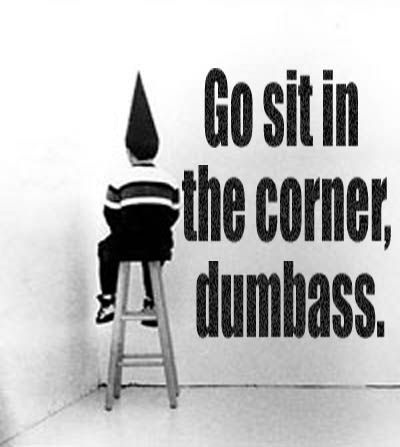
Okay, okay. That's well and good. But I'm still in a grocery store so I'd better pay better attention to Blake. Where do I still have on a dunce cap?


Reading, and rereading Blake's posts, I settled on three weak spots I needed to address: product blurb, Amazon campaigns, professional ad agency assistance. Since I can't tackle all three at once, I decided to start with the first.
vow
The blurb--or elevator pitch--is where, I hate to say:


Some pitch as naturally as others breathe. But Professor Blake enabled me to face my pitching suckiness and vow: "I'll pay someone to beat you!"

Today I followed Blake's lead and engaged the services of 


That's it for now. I'll keep you posted on the blurb results if there's any interest. 

Here are the links to my first three courses at Blake's Academy for AAAs:

Saturday, May 4, 2019

A Writer's Notebook: Blue Plastic


Let's try something different here: a completely random and spontaneous collection of thoughts about writing and the writer's life. In no particular order today...

Few of those who know us personally can believe that we might have real talent or maybe something greater still. Almost everyone thinks about writing a book--and what a beauty it will be! But they never get around to it for a few hundred reasons. The writers they love are all strangers, blessed not with more talent but more money and time and connections. They're not marred by our own flaws or plagued by our personal demons. So it's possible to admire their work and find within it an excuse for procrastinating or giving up completely.

                                                                  *****

Never judge a book by its cover? Puh-leeeeeze! We don't have much choice these days with a million-odd books coming out every year. The covers are a wilderness of signs coming at us at dizzying speed. Recently, a stranger sent me two of her self-published books as a prize for a contest I'd thoughtlessly entered. To this day I haven't read them. I gave one of the two a five-page look and the pages weren't bad. But I couldn't get past the two bland boilerplate front covers or the amateurish copy on the back. The covers discouraged me from reading on, and made me doubt the author's commitment to her craft or her ability to deliver the goods.

From Russell Blake, I learned the importance of redoing covers, if necessary, until we get them right. I tried doing my own when I started publishing online. Since then, I've redone all of them, sometimes more than once. Yes, it costs money, but the dough is well spent. After all, readers deserve our best and we're being judged at a glance.

                                                                    *****


We're told to steer clear of wordplay or verbal pyrotechnics, a word we also shouldn't use cuz some might have to look it up. The stated theory is this: nothing should distract the reader's attention from the story itself. I say the 'stated theory' because I have my own theory: that those who hold this are quick to condemn what they lack. And what's that? Not a sense of humor, certainly. I mean a mental quickness, the power to perceive and to pounce on connections that many others miss.

Come on, really. After all, one of the greatest literary thrillers dared to rope us in with this:L

'Lolita, light of my life, fire of my loins. My sin, my soul. Lo-lee-ta: the tip of the tongue taking a trip of three steps down the palate to tap, at three, on the teeth. Lo. Lee. Ta.'
--Nabokov

                                                                       *****

Moving on now. We all know the importance of proofing our work carefully. No, more than carefully: obsessively! And so we try harder...and harder...proofing 5, 6, 7 times! Still, time and again, more of the damned little beasties slipped through: a missing or a double period, a typo, a computer glitch, etc. Even the most tolerant readers will come to regard these as sand in their eyes, each grain a further betrayal of trust.


In my continuing education, I tried two experiments. And here is my report:
1) The free version of Grammarly will do wonders for your essential proofing, from typos to spellos to word wrongos to missing Oxford commas.
2) But Grammarly Premium is the one to get, even if you have an editor. GP will reduce your real editor's work, thereby reducing your cost. It will point out if a word or phrase is tired. If a word should be missing, and thus not picked up by Spellcheck, it will question the sense of the sentence. It will offer alternatives to a word that doesn't seem quite on the button.

That said, when the manuscript has been put through GP,  I've learned the imperative of having beta readers who are familiar with my work. Nothing is better than that kind of beta for catching inconsistencies within a series of books or for pointing out back story needed--and back story that can be shortened or scrapped.

                                                                   
                                                                       *****

One final point, for now, on rewriting. This new book has taught me that it's only in part about cutting. My final draft is always about half the original length. But in my quest for pith, I learned, now and then I scrapped things that readers had to know: a character's reaction, for instance, or a telling detail.


Here's just one example.

In the book, Starr is 'working' the town bouncer in a bar. She lies in claiming that her husband often can't perform at night. The bouncer commiserates. He knows what she means, he says, though his definition of ED couldn't be more wrong. In the original text, Starr says only, "That's it."

Readers, I'd thought, would see a droll, superior look in Starrs's eyes. But, in fact, they were just as likely to think Starr didn't know any better.

I added instead of subtracting:
Starr cries as if enlightened, "Right! I should've guessed it's got a name!"

Not perfect, no, but clearer.

                                                                 *****

Well, that's it for today. If the interest is there, we'll come back to this notebook again. Then I'll tell you how the receipt of a blue plastic item dovetailed with my research for the next book and kickstarted the outline. It's an explosive illustration of synchronicity in writing.