A New Life in Seattle

A New Life in Seattle
August, 2018
Showing posts with label editing. Show all posts

Sunday, May 12, 2019

I've Enrolled in Russell Blake's Academy for AAAs

I heard the school bells ringing after seven years as a struggling e-book writer--and thirty years after my award-winning hardcover first novel. With fourteen books beneath my belt, the bold thought occurred to me that I shouldn't need to work in a grocery store to pay the rent.


Now, it wasn't as if I'd never asked myself this tough question before. I'd tried different types of books, built up a small readership, experimented different cover artists, learned the imperative of the ground running for all sample readers. My last book received a record, for me, 54 reviews--all 4 and 5 stars. As the first book in a new series, I felt encouraged. I'd stumbled onto something that floated readers' boats. And yet I remained in a grocery store, worried that I'd still be there in another seven years.

Let us segue to a happier note, one sounded out by a king: Russell Blake.


A USA Today bestselling author, Blake has written a half-hundred novels, in almost every genre. Unknown to Russell, on his blog he succeeded in founding a school:


                Russell Blake's Academy for Ailing Amazon Authors 

I believe I'm the first of his students. Or I'm the first, at least, to tackle his curriculum systematically and with a vengeance. (I'll provide the links below for your own tuition-free enrollment.)

A stern but compassionate teacher, RB starts with a checklist for his students. When there are no clicks--or when there are clicks that fail to convert into sales--we need to make way through the checklist:
Proper formatting
Cover
Proofreading
Editing
An interesting, unusual story
Riveting opening pages
Etc.

I'd reached a point in my journey where I knew I scored A's on a number of fronts. On the new book, for example, I'd deleted the first 20 pages wherein I'd been clearing my throat--and came on now as if on stage, belting the tune at full force.  I'd used Grammarly Premium to purge the book of typos and punctuation pratfalls. Then I'd solicited feedback from two writers I respect: Brad Strickland and David North-Martino. And J.T. Lindroos' new covers were getting rave reviews.

Okay, okay. That's well and good. But I'm still in a grocery store so I'd better pay better attention to Blake. Where do I still have on a dunce cap?
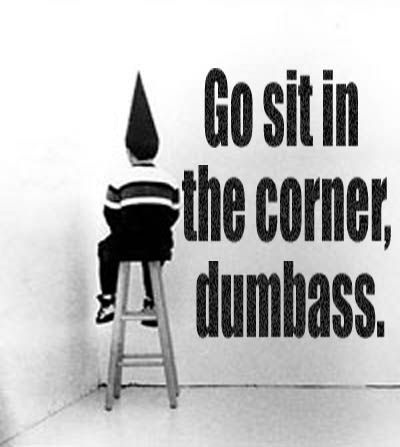


Reading, and rereading Blake's posts, I settled on three weak spots I needed to address: product blurb, Amazon campaigns, professional ad agency assistance. Since I can't tackle all three at once, I decided to start with the first.
vow
The blurb--or elevator pitch--is where, I hate to say:


Some pitch as naturally as others breathe. But Professor Blake enabled me to face my pitching suckiness and vow: "I'll pay someone to beat you!"

Today I followed Blake's lead and engaged the services of 


That's it for now. I'll keep you posted on the blurb results if there's any interest. 

Here are the links to my first three courses at Blake's Academy for AAAs:

Saturday, May 4, 2019

A Writer's Notebook: Blue Plastic


Let's try something different here: a completely random and spontaneous collection of thoughts about writing and the writer's life. In no particular order today...

Few of those who know us personally can believe that we might have real talent or maybe something greater still. Almost everyone thinks about writing a book--and what a beauty it will be! But they never get around to it for a few hundred reasons. The writers they love are all strangers, blessed not with more talent but more money and time and connections. They're not marred by our own flaws or plagued by our personal demons. So it's possible to admire their work and find within it an excuse for procrastinating or giving up completely.

                                                                  *****

Never judge a book by its cover? Puh-leeeeeze! We don't have much choice these days with a million-odd books coming out every year. The covers are a wilderness of signs coming at us at dizzying speed. Recently, a stranger sent me two of her self-published books as a prize for a contest I'd thoughtlessly entered. To this day I haven't read them. I gave one of the two a five-page look and the pages weren't bad. But I couldn't get past the two bland boilerplate front covers or the amateurish copy on the back. The covers discouraged me from reading on, and made me doubt the author's commitment to her craft or her ability to deliver the goods.

From Russell Blake, I learned the importance of redoing covers, if necessary, until we get them right. I tried doing my own when I started publishing online. Since then, I've redone all of them, sometimes more than once. Yes, it costs money, but the dough is well spent. After all, readers deserve our best and we're being judged at a glance.

                                                                    *****


We're told to steer clear of wordplay or verbal pyrotechnics, a word we also shouldn't use cuz some might have to look it up. The stated theory is this: nothing should distract the reader's attention from the story itself. I say the 'stated theory' because I have my own theory: that those who hold this are quick to condemn what they lack. And what's that? Not a sense of humor, certainly. I mean a mental quickness, the power to perceive and to pounce on connections that many others miss.

Come on, really. After all, one of the greatest literary thrillers dared to rope us in with this:L

'Lolita, light of my life, fire of my loins. My sin, my soul. Lo-lee-ta: the tip of the tongue taking a trip of three steps down the palate to tap, at three, on the teeth. Lo. Lee. Ta.'
--Nabokov

                                                                       *****

Moving on now. We all know the importance of proofing our work carefully. No, more than carefully: obsessively! And so we try harder...and harder...proofing 5, 6, 7 times! Still, time and again, more of the damned little beasties slipped through: a missing or a double period, a typo, a computer glitch, etc. Even the most tolerant readers will come to regard these as sand in their eyes, each grain a further betrayal of trust.


In my continuing education, I tried two experiments. And here is my report:
1) The free version of Grammarly will do wonders for your essential proofing, from typos to spellos to word wrongos to missing Oxford commas.
2) But Grammarly Premium is the one to get, even if you have an editor. GP will reduce your real editor's work, thereby reducing your cost. It will point out if a word or phrase is tired. If a word should be missing, and thus not picked up by Spellcheck, it will question the sense of the sentence. It will offer alternatives to a word that doesn't seem quite on the button.

That said, when the manuscript has been put through GP,  I've learned the imperative of having beta readers who are familiar with my work. Nothing is better than that kind of beta for catching inconsistencies within a series of books or for pointing out back story needed--and back story that can be shortened or scrapped.

                                                                   
                                                                       *****

One final point, for now, on rewriting. This new book has taught me that it's only in part about cutting. My final draft is always about half the original length. But in my quest for pith, I learned, now and then I scrapped things that readers had to know: a character's reaction, for instance, or a telling detail.


Here's just one example.

In the book, Starr is 'working' the town bouncer in a bar. She lies in claiming that her husband often can't perform at night. The bouncer commiserates. He knows what she means, he says, though his definition of ED couldn't be more wrong. In the original text, Starr says only, "That's it."

Readers, I'd thought, would see a droll, superior look in Starrs's eyes. But, in fact, they were just as likely to think Starr didn't know any better.

I added instead of subtracting:
Starr cries as if enlightened, "Right! I should've guessed it's got a name!"

Not perfect, no, but clearer.

                                                                 *****

Well, that's it for today. If the interest is there, we'll come back to this notebook again. Then I'll tell you how the receipt of a blue plastic item dovetailed with my research for the next book and kickstarted the outline. It's an explosive illustration of synchronicity in writing.


Monday, April 1, 2019

Let the Lion Roar Some More

Of a sudden, I felt a lion's roar within.


The manuscript for my new book has gone off to five readers. I've run a third of the text through Grammarly, an editorial app, and should have an error-free copy in a few more weeks. I felt good. But then the lion roared and I began to grow hungry for more.

Now that I knew I was on schedule, not late, I sought to emulate my writing schedule of last year, taking notes and outlining for the next couple of months and then starting to write sometime in June. The first thing I needed: a hardback Moleskine-style notebook, the very sort I used last year.

I placed a rush order today, wanting--needing--to put on more speed.

Good, good, very good. And yet the lion roared again. How about the new job search I'd been thinking of for months? I'd acquired a certificate from an online course in medical terminology. Okay, while I finetune and buff my resume, why not take a second course in HIPAA (records privacy)? At two lessons a week, I can earn a second certificate in six weeks. Goal: a better job with a better schedule and more bucks for travel and promotion of my books.

One more roar now, lion, please: bring on the smile power now. A certain procedure that's gone on for months should be a wrap within three-four weeks. Keep your fingers crossed for me.

Coming your way soon:


No, wait. That's the great Owen Laukkanen's killer smile!

Let's all roar, once more, for mine by the end of April.

Sunday, December 9, 2018

Post-Producers Bring Home the Bacon


Get this: Quentin Tarantino has begun post-production on Once Upon a Time in Hollywood, for which he wrote the screenplay in 2017. Principal photography began in June of this year and the release date is scheduled for July 26, 2019. So the actual shooting time was 5-6 months, book-ended by long periods of preparation and post-production.

This process is much on my mind nowadays, for there's been a change in my thinking about the writing process. Instead of seeing a work in progress as a long, brutal sequence of drafts, I'v come to see it as a lot like filming:
--Months of outlining, research and 'location' work: scouting the book's best settings etc.
--First draft, the literary equal of principal photography--with all the out-takes, bloopers and footage bound for the cutting room floor.
--Post-production. Anywhere from three to six more months of work.

What does that entail? The second draft becomes my starting point. After this initial cleanup, I have a better idea of the novel's 'running time' and can see if the structure is sound. If a three-part book, for example, clocks in at 300 pages and the first part takes up half of those, I've got a problem to fix.

Once upon a time I would have jumped right on that, jumping into the third draft. Not now. No, now for me is not the time to fix stuff or prettify the prose. Page by page, I'm making way like a post-producer with multi-colored Post-it notes:


Lots of these are filled with questions:
--What is the difference in class schedules between Groups A and B?
--What telling details can bring this character to life?
--What are the size and layout of this room?

Other sticky notes are nudgers:
--Flesh this out.
--More crackle in the dialogue,
--Too soon (or too late) for this clue.
--Maybe this should go.
--This isn't quite clear or quite there.

And still other stickies are fillers for blanks in the first draft:
--Quote on insurance frauds.
--Stats on bad faith insurance lawsuits..
--Menu for high-class cuisine.
Etc.

                                                             *****

So what's the difference, some may ask? Grooving on all three parts of the creative process energies and uplifts me. And I'd feel cheapened if  I cheated on any of the three. By the same token, I'd feel cheated if I cheapened any part, cutting it short because 'writing' is more fun.

Post-production, for me, is a theme park of fun. And it's at the heart of what I do.

If you haven't already, do give it a try. When you're in the post-production zone your brain looks a little like this:


Monday, December 7, 2015

Never Second Guess Your Instincts


As I wrote my new book, Caesar's Ghost, some parts cried for the present tense and some cried for the past. I just followed my instincts while writing. But then, as I went through the subsequent drafts, the Brutal Old Bastard (BOB) of my inner editor began to carp and criticize. Why here, not there, in the present? Why there, not here, in the past?

Now, I knew BOB was right on the money about not jumping tenses in a single paragraph--a source of confusion for readers. And I could understand BOB's preference for consistency: dream sequences or diary entries, for example, in the present tense. BOB might even be okay with all action scenes in the present--lending the scenes more urgency.

But, through the rewrites, BOB kept attempting to gain total control. Some scenes resisted--almost violently--my efforts to change tenses. My fingers would not hit the keys that would have changed the scenes. And it was time to let BOB know that he wasn't running the show, just helping to produce it. In fact, when given full control, BOB tends to trip on the feet of his rules.


I reached a compromise solution. I'd change any part from present to past tense--unless my fingers screamed in protest. And I'd devise a subtle way of highlighting my segues from the past to present tense. 

Many of BOB's rules are sound, while others are the barks of another century's harridans. 


Readers and viewers are fluent in the language of mixed time lines:

Point BlankThe LimeyProduct DetailsHomeland: Season 1


So I listend to BOB, with all due respect...but I followed my heart and my fingers.

Sunday, September 21, 2014

It's the Tiniest Thing(s) That Can Get You

By the 49th draft of a novel, you'd think that you've got it down pretty well pat. A bit more pruning and prettification, then you'll be set to go. Right? Well...

The enemy at this point is a simple fact of life: with every pass through a novel, our blinders grow more tightened to anything we've missed. We're quite right to search with new fury for typos, spellos and grammos that have slipped past our eagle eyes. At the same time, though, we need to renew our hunt for wrongos that can undo us: inconsistencies, lapses in logic, glitches in the timeline, etc. 

I'd also add to this list small wait-a-second spots. These are especially deadly for writers of suspense, for they break the charmed narrative spell and cause readers to scratch their heads in wonder: Wait a second, haven't we established that the character's wearing brown socks and not green?...Wait a second, now the author's saying that his character was warned by X about Y two or three chapters ago? Where's the warning hidden?...Wait a second, the hero was listed as fourth on a list of seven victims--and now he'll be the third to go?

Wrongos occur for good reasons sometimes, A character was dropped, for example, resulting in the changing of a list. Or the timeline was condensed to add some more oomph to the story or simplify things for the reader. And, not to be too unkind to ourselves, wrongos are inevitable when we're spending months, even years, on our books. Even with the best of charts, our characters' eye colors may change on us...or, God save us, we may forget the color of their socks.

I'm happily hunting for wrongos these days as I work on RC, my new winter release. And each day's work starts with this mindset: small slips are waiting to get me and I need to take them down. I owe that to my readers.

Charge!

Saturday, August 23, 2014

Three Cheers for Lady Striker!


I've been haunted by one memory for nearly twenty years. And it's much on my mind as I work on RC, my upcoming winter release...which continues a battle I've fought for as long: the word count required for a book to be called a novel. RC, when it's finished, will weigh in at just under 40,000 words. In terms of length, tight narrative and speedy style, it's cut from the same cloth as Nobility, April Yule and The Vanishing Magic of Snow. My three 'action mysteries' starring Boss MacTavin aren't much longer, really--45,000-50,000 words.

The short form seems naturally suited to me. And I won't object at all if my books are called Short Novels. But they are not novellas or long short stories. Let's come back to this in a minute...after you've met Lady Striker.

On board a train to work one day, I watched a well-dressed and very pretty blonde--clearly not a nutcase--defacing a thick hardcover book. Estimated length: 800 pages easily. She wielded a black felt tipped pen. Her expression was calmly, but happily, sadistic. At a pace of three pages a minute or so, she blacked out words, sentences or entire paragraphs. She did not deliberate, moving on decisively.

I wondered then and wonder now: Why not return or trash the book if she felt that strongly about it? Why destroy it in that time-consuming way? My personal impression: she was a writer or an editor, or just an angry reader, who'd had it to here with the padding and fluff used to pump short stories up into epics. I believe she may have taken this book as an example--a chance to see what was actually left when the padding and fluff were removed.

I came to call her Lady Striker. And I've known since that day I did not want that woman taking her Sharpie to one of my books.

                                                                    #####

The length issue's made out to be far more complex than it should be. A good starting point on the subect can be found on the website goodshortnovels.com:

http://www.goodshortnovels.com/how.html

When I first started writing Nobility, the first of my Short Novels, I met with such length resistance that I sent out a full-page list of short books sold as novels on the shelves of major stores. The list included The Postman Always Rings Twice, The Old Man and the Sea, The Strange Case of Dr. Jekyll and Mr. Hyde, etc. I'd also noted gift holiday books made up of a few dozen pages but sold as novels nonetheless. But publishers and agents then were unenlightened on the subject--except when, beyond doubt, bucks were to be made.

I believe we need general guidelines. A twenty-page book printed in 16-point type should not be considered a novel. But, regardless of its page or word count, short and long novels deliver these goods: character growth, thematic richness, narrative complexity and resolution.

Now, we don't always want a twelve-course meal:


But even the shortest of novels should offer us more than a bon-bon:


We should finish a novel, regardless of length, with a pleasant sense of fullness...not a hollow craving for more after this: