A New Life in Seattle

A New Life in Seattle
August, 2018
Showing posts with label Claude Bouchard. Show all posts

Friday, February 2, 2018

The First 5 Pages: Series Interruptus: Chapter 2

So I downloaded the free sample of Claude Bouchard's 13th Vigilante thriller, Make It Happen. Now. as this blog made clear last week I was looking forward to reading it. Naturally, you'd assume that I plunged right into it. After all, samples usually run up to 25 pages, no more. But the reading didn't go that way. I held back till the following morning. Why?

1)  The first reason was a scary one, based on my memories of agents and my reading of one scary agent's horrifying book:


In Noah Lukeman's version of hell, agents coldbloodedly skim the first 5 pages of submissions. Now and then, they'll speed-check 5 pages outs of sequence, looking for howlers, typos or yawns. You don't get 50 pages...or 30...or 20...or 10. You get 5--and then the boot if you haven't hit the ground running.


I knew that my own thinking had grown a lot closer to Lukeman's... and I feared I might not be as easily hooked as I had been years ago.

2) Plus, I was six books behind in the series and I wanted a binary mindset: reading as both a truant Vigilante fan and a reader who was new to Bouchard.

Come morning, I felt ready ready to do so.  And now I present my own


--To begin at the end of the 23-page sample, I felt hooked enough to buy the book, on which I'll report next week. Today let's consider the purpose of samples and why this one succeeds.
--Though the sample concludes with a hell of a bang, Claude Bouchard starts on a quietly ominous note: a lone motorbike rider in Pakistan putters along a dirt road toward a dilapidated farmhouse, in truth little more than a shack. The tone is gravely measured: 'He was well aware that he might be heading into a trap and, if he was, he had nobody else to blame but himself. After all, he had set the wheels in motion which had eventually led to this impending meeting...which might...put him in peril and even result in his demise.' Within three more pages, he's led by armed guards to the man he's come to meet: Abdel Omar Al-Tashid, the self-appointed leader of the State of Islam.
--By steady and subtle degrees, we're brought closer and closer to the two men's objectives. Then the narrative cuts deftly to characters preparing for an air show in Canada. Then to a terrorist who's come to implement the plan. I emphasize the smoothness of the writing because a writer less skilled or confident than Bouchard would have felt the need to zip along and hurry to the Good Part. For Bouchard every page is a polished part of the book's procession.
--The Big Bang at the end of the sample is as powerfully 'shot' as a big budget film. The writing technique brings out the big guns of style. And yet I was moved to buy this book before the big bang. I dug the smoothness of the writing. The fine touches of characterization. The assured sense of pacing. Sold.
--And what of Series Interruptus, my arriving here so far behind? There's no sign, by the sample's end, of the former vigilante, Chris Barry, or his cop-friend Dave McCall. Though the story's easy to follow, I'm left with a pleasant sense of mystery. A Vigilant novel without Chris Barry and/or Dave McCall?
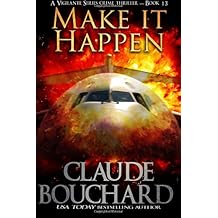
--The cover, by the way, does a mighty fine job in portraying the explosive storyline.
--And talk about ending on a cliffhanger: I don't know if Bouchard planned the sample cut-off point, but few readers of the sample are not going to need to read on.


Till next week!

Thursday, January 25, 2018

Series Interruptus: a Claude Bouchard adventure: Chapter One

You know what it's like. At least you do if you have favorite authors who are extemely prolific. Tending to one list, you let your others fall behind. Then, in turn, you turn to another...And so on and so forth. Soon enough, you've fallen behind on nearly of them. And you have that sinking feeling: How can you ever get caught up with X or Y or Z? You're ready to play Reading Bingo.


Your frustration is compounded when you're hooked on several series. In my case, I got hooked on Claude Bouchard's Vigilante series: loving their quirky wit, shocking twists and stylish prose. At the same time, I admired two series by Russell Blake, who's capable of writing 8 or 9 novels a year. And I do like to try to keep up with James Patterson,,,Michael Connelly...Harlan Coben...Robert Crais...and on and on and on.

This would be no problem if I were Pam Stack, capable of reading 400 novels a year.


But aside from reading, I work full-time and write a few hours each day.

Which brings us back to Claude Bouchard, whose 13th Vigilante novel has just hit the online shelf. 


Make it Happen (Vigilante Series) (Volume 13)


The subject interests me and I really dig the fact that CB took his time with this, refusing to hurry the novel along. But I drifted about midway through the series--blame that on Russell Blake--and in time I starting wondering if I could recover from Series Interruptus. 

Still, now that I'd written a number of standalone Boss MacTavin mysteries...and have just finished a new spinoff series...I wanted to approach CB's #13 as a new reader--and see how cleverly and carefully he brings a new reader into the fold.

Step one: today I ordered a Kindle Sample.  Tonight, I'll see if the sample compels me to part with cold cash.

Tomorrow: my reaction.

Then, if all goes well: my end report of this book as a standalone...how it works as such--and why...and if it succeeds in sending me back to #6. 

Till then.

Wednesday, November 15, 2017

Serial Thrillin': The Bitchinest Ripsnorting Round Table Joust: 1


Five knights. One theme, of interest to writers and readers alike: the rewards and challenges of a writing a mystery series...and succeeding at giving it legs. The five knights, in alphabetical order:

Carolyn Arnold
International bestselling and award-winning author, as well as a speaker, teacher, and inspirational mentor. She has four continuing fiction series and has written nearly thirty books: from cozy to hard-boiled mysteries, and thrillers to action adventures.

Claude Bouchard
USA Today Bestselling author of the fourteen volume Vigilante Series as well as Nasty in Nice, ASYLUM and Something's Cooking. Other interests include reading, playing guitar, painting, cooking, traveling and trying to stay in reasonable shape.

Joe Clifford
He is the author of several books, including Junkie Love, Lamentation, December Boys and Give Up the Dead, as well as editor of Trouble in the Heartland: Crime Stories Inspired by the Songs of Bruce Springsteen. He lives in Oakland, CA.

Bill Kirton
University lecturer, TV presenter, wood carver, playwright, actor, director, RLF Writing Fellow, novelist. Crap at marketing or promotional work and possibly the laziest knight at the table (so says he). 

Brad Strickland
Author of 80 published books, including the ones he writes under the pen name of Ken McKea. These follow Florida detective Jim Dallas, who despite being retired on disability somehow can’t help running across murders. Brad lives in Georgia with his wife Barbara and a small assortment of varmints.


1) Why write a mystery series instead of a series of mysteries? 

Is commerce the main factor or is some other payoff at play?

ARNOLD
I love being able to torture my characters over a longer stretch of time. And I don’t like saying goodbye to them. By writing a series, at least I know when I’m wrapping up a book, I’ll be with them again soon. I also believe readers love to get attached to characters and when you’re providing them with a series, they can do so knowing there will be more books coming.

BOUCHARD
From the time I started reading and then going forward, series have always been attractive, in large part due to growing familiarity of the main characters – think ‘Cat in the Hat’, ‘Bobbsey Twins’, ‘Hardy Boys’ and ‘Tom Swift’ before even getting to adult fiction. The same holds true with writing where one can develop and build one’s principal protagonists from one adventure to the next as compared to creating new, unknown characters with each new novel. Increased comfort exists when working with ‘people’ one already knows. The commerce factor obviously comes into play as many readers also enjoy said comfort and familiarity.

CLIFFORD
Like with any venture, there are pros and cons. The biggest “pro” is, if a series takes off, you have a built-in readership. Also in the plus column, a series allows you to examine a character and world a little deeper. Think Star Wars vs., say, well, any one-off sci-fi film. Most of all publishers love a series. Less risk, established commodity, etc. The downside is:  if you don't have a series as popular as Lee Child, the average series writer often sees a dip in sales with each book and finds the critical response to be harsher, despite each book getting "better." At least that has been my experience.

KIRTON
I suspect that a mystery series is the better bet. If you can create one or more characters that intrigue the reader, characters they’d like to spend time with, that’s more likely to draw them into buying more of the books in which they appear. I suppose that’s why I call my series The Jack Carston Mysteries.

On the other hand, if you find a stand-alone mystery to be gripping, you instinctively trust the author to deliver again on suspense, thrills, horror, whatever.

STRICKLAND
A series allows a deeper exploration of the characters’ personality—strengths, flaws, problems, solutions. I like the notion of a broad canvas that gives a kind of epic sweep. In the case of Jim Dallas, Jim has issues to deal with and resolve. Through all the stories arcs the tale of his smoldering anger and bottled-up desire for vengeance, which will eventually pay off.  I’m approaching a kind of midpoint which will begin the overall climax of the series.

So in a sense, a series is simply a group of oversized chapters in a longer story. There is, of course, also the consideration that a writer can invite readers to climb aboard for the whole journey—so a series tends to build readership. Have to say that commercial concerns aren’t the greatest with me, though they do factor in. From the get-go, I’ve had a definite goal in mind for the Jim Dallas stories.


2) For perspective,  give us a few names of your favorite 

mystery series writers.


ARNOLD
I loved David Baldacci’s Camel Club series, and have also enjoyed some of the books in Janet Evanovich’s Stephanie Plum series.

BOUCHARD
Michael Connelly, Robert Crais, Lee Child, Jeffery Deaver, Jonathan Kellerman… Oh, you said a couple of names… Sorry. Anyhow, this is just a handful of writers who have consistently produced well developed, intricate storylines with strong, believable, three-dimensional characters. I never read a book by any of these authors which left me disappointed. I could mention that Child may have pushed it a bit on occasion but, then again, we are talking Jack Reacher.

CLIFFORD
I like what Lehane (more on him later), Sara J. Henry, Allen Eskens, and Matt Coyle are doing with their respective series. Of course there’s the granddaddy of them all: Phillip Marlowe.

KIRTON
Dalziel and Pascoe, created by the late Reg Hill, are great examples of powerful characterization and the dynamic created by a close friendship between different personalities. (Humour also helps a lot.) 

I’m not sure whether Janet Evanovitch’s Stephanie Plum novels qualify as mysteries, but the characters are so memorable and so funny (especially Grandma Mazur) that I need a regular 
therapeutic dose of them.

STRICKLAND
Jim Dallas owes a clear debt to Travis McGee and his creator, John D. Macdonald. I like the narrative voice in these—McGee is a principled, if “tarnished” hero (MacDonald’s own word) who teeters between wishing to resign from the over-complicated modern world with a drive to become involved with the victims of it. Similarly, Dallas pulled out of everything to lick his wounds (physical and psychological) after a traumatic encounter with organized evil, but he finds that campaigning for justice among the helpless cast-aside members of society helps him heal, and gets him ready for the challenge he knows is coming.

Another MacDonald, Ross MacDonald, is another inspiration. He took the tough-guy private-eye story to literary heights with his Lew Archer novels. I like his way with words and also his gift at plotting, which is not always on high display in this kind of story—for all his accomplishment, Raymond Chandler famously plotted by “having a guy come through the door with a gun” when things got slow. I don’t think there’s a finer, more jewel-like plot in private-eye fiction than in Ross MacDonald’s brilliant The Chill.

Both of these gentlemen give us a wry, world-weary, but game character who gives a problem his all—something I try to emulate.


3) Now to you...What is the most distinctive thing about your 

mystery series?

ARNOLD
I offer readers a strong female protagonist detective, a male rookie FBI agent, and a married, murder-solving duo. In every book I strive for procedural accuracy, and as a result have been praised by law enforcement. This has led me to take on the brand line POLICE PROCEDURALS RESPECTED BY LAW ENFORCEMENT.™

BOUCHARD
Likely the most distinctive thing about my mystery series is all my main characters are Canadian yet none of them say, “Eh,” at least not when I’m around. Also, the members of the ‘Discreet Activities’ team are all well educated with respectable, professional backgrounds as well as smart, witty and highly sociable yet they kill for a living.

CLIFFORD
That they work both as standalones and part of an overarching storyline. Also I am hoping to shine a light on the grave injustice perpetuated against my father, namely that the Manafort family (yes, those Manaforts) and their greedy, gross misconduct directly led to my father’s premature death.

KIRTON
Hard to say. Humor's essential, even (or maybe especially) in the more gruesome cases, and I like the idea that people don’t automatically divide into goodies and baddies. My detective has no particular vices. He’s happily married to a wife who matches him for wisecracks, and yet constantly finds himself thinking politically incorrect things and chastising himself for it. I also end each book with a little scene designed to say ‘OK, reader. The mystery was solved and everything’s back in place – except that’s not the way the world works – different bad things keep on happening.

STRICKLAND
I think it might be the blend of humor and detail. I get letters about how real the background is—“I ate in that restaurant!” “I know exactly where that river is!” and so on. Having Sam Lyons as a foil character gives me a chance for a lot of repartee and shaggy-dog jokes, which I love. But capturing something of the Florida milieu (changed even from the days of Travis McGee) also gives the stories a kind of flavor. Still to come are a story that takes place, partly, at a theme park (I have relatives who worked for two of the biggest ones) and one that will feature intrigue at a posh Miami hotel, secretly falling on hard times but keeping up a front. I think the details in these will ring true. I have my informants. . . . 


But the truth of the background is meant to reinforce the psychological truth of the characters.


4) Can your books be read as stand-alones or should/must

they be read in sequence?

ARNOLD
They can be read as stand-alones.

BOUCHARD
Each of the thirteen installments of my Vigilante series to date is a complete story and can therefore be read as a standalone. However, as with most series, reading them in sequence allows for a better flow in terms of character introduction and development. In addition, past events are occasionally referenced or directly related to the plotlines of later installments which also supports sequential reading as the best option.

CLIFFORD
As stated above, both, although obviously reading in order is preferable. You simply get more.

KIRTON
Mine are conceived as stand-alones, but in the knowledge that I have a group of people I know quite well and whom I trust to be themselves.

On the other hand, my two historical mysteries are only a pair because readers asked for a sequel to the first one in order to know how a particular relationship developed. I still think each is self-contained but reading them in sequence would add to the pleasure. (Some readers have now asked for a third, so it may become a series after all.)

STRICKLAND
I have no trouble writing them so they’re stand-alones, though I think they may make more emotional sense if read as part of an extended story. That’s when you begin to make the connections and to see the character development.


5) As a series writer, how do you handle back story from book 

to book—scatter shot or concentrated loads? How do you 

contrive to give just enough details for anchors?

ARNOLD
I’m definitely more a “scatter shot” when it comes to backstory. I provide just enough—and what’s needed—for the current story I’m telling. Obviously if a tidbit about a character’s history is irrelevant to the current plot line, I leave it out.

BOUCHARD
Concentrated loads were used in earlier books with a gradual transition to scatter shots as required as the series progressed. With the fourteenth installment in the works, it becomes somewhat repetitive and redundant to present readers with too much detail relating to ancient history. Sufficient albeit brief data is supplied to new readers in later books to identify characters with the assumption (and hope) that curiosity will lead them to read past installments they’ve missed. As an example from my current WIP, the reader learns of Chris Barry’s financial success years earlier from a line or two of simple dialogue.

CLIFFORD
This is the challenge with each book, and I’ve tackled this task in different ways. You want to avoid the dreaded “auto-dump.” In the latest Jay Porter novel, BROKEN GROUND, for instance, we begin at an AA meeting with Jay speaking, which allowed me to get in a lot of the back-story organically.

KIRTON
I leave it to the characters – which sounds, but isn’t, glib. Each member of Jack Carston’s team has distinct characteristics. Their idiosyncrasies provide the familiarity and continuity to suggest a well-established team who are used to and respond to one another’s behaviours. They are the back story.

STRICKLAND
I leak a little at a time. In the current one, the one I’m writing, we’re going to find out a bit more about the rough ride that Jim had when he worked for Internal Affairs back during his police days. He hasn’t talked much about that—but let’s say that his involvement may have made him say and do a few things that he deeply regrets, that go against his character. More of this will come out as the books go on. In the end, I think a reader can jigsaw together a valid portrait of him that will seem true to life.


6) The age thing. Hell, let’s hit it. Does your hero age/change 

very little over the course of the series (Hercule Poirot, Kinsey 

Malone, James Bond, Spenser)...or age and change 

progressively (Harry Bosch)?

ARNOLD
There’s definite growth to the characters in all my series. Detective Madison Knight started off really rough around the edges. She’s still a hard-nosed detective who will do whatever it takes to find justice for murder victims, but she’s softened on a personal level. She used to be terrified of committing herself to a romantic relationship, but that’s a thing of the past. I think I might even hear wedding bells in her future. But that’s still a few more books out from—if it does happen.

Brandon Fisher started out as a new agent with the FBI in book one. As readers progress in the series, they are taken along the journey of him becoming a full-fledged agent with the BAU.

The McKinleys went from being homicide detectives for Albany PD to amateur sleuths to private investigators. That involved a lot of growth.

BOUCHARD
Chapter headings in each of my books include actual dates to establish a timeline. Book 1 was written in 1995 and set in 1996 while my last release took place in 2016, twenty years later so, yes, my characters have aged. Luckily, they were young enough at the start and I make damned sure they stay in shape from one story to the next.


CLIFFORD
Each book in the Porter series is a year later, which brings us up to the current year

KIRTON
Interesting question because the next Carston story will be the last. Without me trying to impose ageing on him, he’s been changed by the experiences of the crimes he’s solved and the individuals he’s met in the process. I’ve no idea what he’ll do in retirement, but his tendency to try to make light of things and just enjoy life has been severely eroded by the ongoing evidence of man’s inhumanity to man (and especially woman).

STRICKLAND
Heh. Ellery Queen was always 35, until somewhere between books he had a growth spurt and wound up being 57. Jim is aging—the stories are set along a time line of five or six years, and he’ll reflect that in the stories.


                                                              *****


Take seven, as in seven days, to stretch and think about Part 1. Next week we'll return with the provocative conclusion. Among other things you'll learn--but no, mustn't ruin the surprise. You'll also meet a surprise guest. Arrive early for guaranteed seating.

                                                         *****


To learn more about these authors and their books, click on the

following links:

Carolyn Arnold
New title releasing November 28: http://carol0ynarnold.net/power-struggle/

Claude Bouchard

Vigilante Series Box set - Books 1 to 6: http://www.amazon.com/dp/B01EPE926Y

Joe Clifford
Website: http://www.joeclifford.com

Bill Kirton
Amazon Author Page: http://amzn.to/2xz2wSN
Website: hhtp://www.billkirton.com
Book to introduce readers to my work: The Darkness (see answer 11 in Part 2)
http://amzn.to/2gtWVqX

Brad Strickland
Amazon Author Page: https://www.amazon.com/Ken-McKea/e/B00J22N6PS/ref=sr_tc_2_0?qid=1508850962&sr=1-2-ent


Sunday, December 11, 2016

Down and Dirty: The Ultimate Round Table Joust: Part 2


Dedicated to: Pam Stack


Welcome back.

Four knights. One theme, of interest to writers and readers alike: the pros and cons of ebook and traditional publishing. The four knights, in alphabetical order:


Claude Bouchard
CB officially leaped into the writing world in 2009 and his Vigilante Series now boasts a dozen installments with more to come. In addition, he has penned Nasty in Nice, as part of the JET Kindle World, and ASYLUM, a standalone novel .

Leverett Butts
The author of Emily's Stitches: The Confessions of Thomas Calloway and Other Stories, and of Guns of the Waste Land, a series of novellas retelling the King Arthur legends as an American Western.  He lives in Temple, Georgia, with his wife and son.

Bill Kirton
Ex actor, director, voice-over artist, playwright, teacher, university lecturer. Now wood carver and writer of crime, historical, romance, satire, humour, non-fiction books for students. Also a gardener and lover of sport, sailing, good food and better wines.

David North-Martino
The author of Wolves of Vengeance and an ardent martial artist. His short stories have appeared in numerous fiction venues including: Epitaphs: The Journal of the New England Horror Writers, Wicked Tales: TJOTNEHW Vol.2 and Dark Recesses Press. 


                                                                       *****

6) Can you envision a scenario in which a traditional publisher handles some of your books which are easier to sell--while you write the books you choose to writes and publish some independently--as both ebooks and indie print editions?

BOUCHARD
Sure, why not? There have already been indie authors who have gone trad with the print versions of their work while retaining digital writes as well as trad authors who have decided to self-pub some of their works. Anything is possible if involved parties agree.

BUTTS
I think this situation would be ideal. If done well, both the traditionally and independently published books would feed off each other’s audience. It seems like a win-win for me.

KIRTON
Yes, the present context gives us that sort of freedom. On the other hand, I don’t go along with the assumption implicit in the question. When I write, I try to follow specific criteria. I want it to be a high quality, mistake-free product which entertains, absorbs, holds readers’ attention, makes them laugh and/or think and/or believe in my characters. If I succeed, all the books should be equally easy to sell. The element that brings quality and profit together is luck.

NORTH-MARTINO
Absolutely. I consider myself a hybrid writer. I’ve self-published a short supernatural thriller in ebook form, and sent a 90k crime thriller to a contest at Minotaur books. I’m also writing a military horror thriller for a small press publisher on spec, and a sword and sorcery novella on spec for a Big 5 publisher. Hopefully I can finish these manuscripts before the open calls end. If not, self-publishing is always available, and I would never take it off the table. Also, I’m exploring the possibility of having a small press take over my self-published ebook and selling them the print rights. Probably a long shot, but worth checking into.

For those not in the know, the small press is a middle ground between indie and the Big 5. All publishing is fraught with peril, and you can get burned just as easily in the small press where there’s not much in the way of an advance, and the publisher is running on a shoestring budget. I’ve heard horror stories of writers getting their rights tied up in bankruptcy proceedings, but on the positive side, small press publishers handle editing, covers, assist with reviews, and there are some that have decent distribution to bookstores and libraries. There’s probably more opportunity in science fiction and horror, but it’s something to consider if you’d like to have a publisher invest in your novel but can’t land a Big 5 deal, want a lower bar for entry, or just more creative control.


7) Do you see ebook publishing as a stepping stone toward the Yellow Brick Road (superstar agent, humongous advances, etc.)...or, getting back to our first question, do you value things about it you'd reluctant to lose completely? E.g.: the power and the freedom of running your own business...the power that enables Russell (Titan) Blake to produce numerous best-selling thrillers a year?

BOUCHARD
I do see the possibility of indie publishing being a stepping stone to bigger things though it is not my specific goal. If approached with a lucrative deal, I would certainly consider it and, if it was viable, I would have no problem letting go some control. To illustrate, consider the following completely fictitious scenario:
 
Big Honcho Publishing House: Mr. Bouchard, we’re offering you twenty million dollars per title you have written plus a thirty percent royalty on all subsequent sales plus fifty percent of any revenues subsequently generated by television and/or film production.

BUTTS
Why not both? I do hope that my sales of indie-published books will one day open doors for me in the larger houses, but even if they don’t, I am happy with what success I have had so far. I certainly like having the freedom to try new forms such as the multiple narrators and points of view in Guns of the Waste Land and the interconnected stories making a single novel in the first part of Emily’s Stitches. I don’t think a traditional publisher would be comfortable with those experiments without proof they’d sell.

KIRTON
Stepping stone to fame?. No. Except insofar as, if any of my books is going to get me the goodies you brandish, it’ll probably be ‘discovered’ in ebook form, so they can clearly contribute. I hate ‘running my own business’, which I guess is what I’m doing, and I’d gladly hand all that over to someone who knows how to do it. Because I don’t.

NORTH-MARTINO
I love the freedom that indie publishing provides, at least I like the idea of the freedom that it provides. I’m a very independent person, but I don’t enjoy going it alone when it comes to publishing. I would rather have a publisher, small or large, handle my work, buying it because they believe in it, instead of trying to do this all on my own. That’s something I wouldn’t have learned about myself if I hadn’t initially gone the independent route.

While I do look at indie publishing as a stepping-stone to bigger things, I also see it as a complement to a larger career. I’m very open to being a hybrid. I have no problem selling some books to the big 5, some to the small press, while putting out others independently. Let’s not forget that breakout books not only happen to the traditionally published, but also to independent authors. Just look at Andy Weir’s The Martian as an example.


8) Aside from your writing/editing/proofreading skills, what other skills do you regard as absolutely essential? And: are these skill sets really completely different from those required of traditionally published authors? (The days, for instance, are long past when any author can say, as one actually did: 'The hell with editing and proofing--that crap's for my agent and editor!')

BOUCHARD
A number of the skills which follow could be purchased from suppliers though it never hurts to have some understanding and knowledge in these areas even if contracting out. Formatting skills in order to transform a manuscript into both a print and digital final product; Artistic/graphic skills in terms of envisioning and/or creating appealing book covers; Social and communication skills to exchange with one’s potential and established audience; Marketing skills to let the masses know one’s work is available. Based on hearsay, I understand many trad authors must now put in more effort with the social/communication/marketing aspects than in the past.

BUTTS
Since self-publishing (and to a lesser degree small press publishing) requires you to wear many hats, you also need skills in self-promotion to help advertise and promote your work. A working knowledge of image editing software is not a bad idea, too, to help you design your covers. This last, if done well, can save you hundreds to thousands of dollars in design fees since you won’t have to commission a cover designer.

KIRTON
The basic essentials – writing, editing, proofing – are skills which are very distinct from one another, but nonetheless in the same ball park, depending on sensitivity to language, rhythm, etc. Promoting and marketing, on the other hand, call for a totally different mindset.

NORTH-MARTINO
You have to be able to manage a project with multiple contractors in your employ. You might have to have formatting skills in multiple formats unless you’re going to hire someone to do it. You might need to have the ability to create your own covers, unless you want to pay to have them commissioned. You’re going to have to have confidence to reach out to other writers and reviewers without having a publishing house behind you. You might not get much in the way of publicity from a traditional publisher, depending on how much for resources they’ve devoted to you, but as an indie you have to either be your own publicist, and do everything yourself, or hire one.


9) Whatever your long-term goals, what are the greatest kicks you get from producing both ebook and print editions?

BOUCHARD
The beauty of the ebook is its immediacy and range of distribution.. Anyone, almost anywhere on the planet can download it and boom, it’s there waiting to be read. As an author, holding an actual print copy, flipping through the pages and knowing I produced it, is pretty cool. As mentioned earlier, the effort required to create a print version is so minimal that it would be silly to not do so, even if it’s to satisfy a small number of readers. True story, a fan who only reads print recently inquired about the next installment in my series, mentioning she had already reserved a spot in her display case. That’s a kick.

BUTTS
The flexibility of having a choice. I find myself preferring to read hard copy at home and electronic versions on the road. I assume most people who are open to e-books feel the same.

KIRTON
Feeling, every time I receive a proof copy of a paperback, as if the nurse has just handed me my beautiful new baby. That’s a sensation ebooks can’t replicate. There’s also the basic satisfaction of having overcome my laziness again and actually finished a book.

NORTH-MARTINO
I haven’t produced a print edition of my novel, but I did enjoy managing the ebook to completion. I’m just not sure I’d want to do it again.


                                                                *****


10) Rogue Question: What have I missed that's important to you?

BOUCHARD
You didn’t ask, “Boxers or briefs?”...and now you’ll never know.*
(Editor's note: Under serious pressure, Claude Bouchard agreed reluctantly to give an appropriate answer to the eternal question. You'll find it at the * below.)

BUTTS
What's the biggest draw to writing? 
For me it's the same thing that drew me to the craft in the first place: I generally write stories that I cannot find elsewhere, and I love being able to tell myself a story. I never cease finding it odd that even as the author, I’m never sure where the story is going, so it’s almost like I’m reading a new novel every time I write. Like the novel is there in the ether fully formed and waiting for someone (in this case, me) to catch and trap it on paper.

KIRTON
What's the letter or email I'd love most to get?
‘I’m thinking of investing several thousand dollars in promoting a friend’s books in the UK, USA, Canada, the Caribbean, South America, New Zealand, Australia, and parts of Africa and Asia. Would you like to be that friend?’

NORTH-MARTINO
What are the best and worst things when it comes to self-pubbing ebooks?
The worst thing about self-publishing ebooks is that your work gets lost in the vast sea that is Amazon. You have the best distribution on the planet, and yet, it can be very challenging to find an audience. Then again, the best thing: it will never go out of print and has an unlimited amount of time to find an audience.


                                                          *****


*As promised, here's the answer Slyboots tried to keep from you. Really, was it too much to hope that Claude Bouchard might confess if he wears briefs or boxers?


Well, we're happy to give you the answer today from Claude Bouchard himself:

"If your readers have to know, the answer is simple enough:

I wear b----s."

*****
To learn more about these four authors and their books, just click on the following links: 

Claude Bouchard
Amazon Author Page: https://www.amazon.com/Claude-Bouchard/e/B002BLL3RK
Website: http://www.claudebouchardbooks.com       
Vigilante Series Box set - Books 1 to 6: http://www.amazon.com/dp/B01EPE926Y

Leverett Butts
Grand Central Review: http://www.grandcentralreview.com/
Author Facebook Page: https://www.facebook.com/LeverettButts/?fref=ts
My Amazon Author Page: www.amazon.com/author/leverettbutts


Bill Kirton 
Amazon Author Page
US: https://www.amazon.com/Bill-Kirton/e/B001KDNSLY
UK: https://www.amazon.co.uk/Bill-Kirton/e/B001KDNSLY
Website/blog: www.billkirton.com
Best intro to his work:  https://www.amazon.com/Darkness-Jack-Carston-Mysteries-Book-ebook/dp/B008X8ZM8G

David North-Martino
Amazon Author Page:  http://amzn.to/1Ir7PWP
Facebook:  https://www.facebook.com/dnorthmartino


Sunday, December 4, 2016

Down and Dirty: The Ultimate Round Table Joust: 1


                                                            Dedicated to: Pam Stack

Four knights. One theme, of interest to writers and readers alike: the pros and cons of ebook and traditional publishing. The four knights, in alphabetical order:

Claude Bouchard
CB officially leaped into the writing world in 2009 and his Vigilante Series now boasts a dozen installments with more to come. In addition, he has penned Nasty in Nice, as part of the JET Kindle World, and ASYLUM, a standalone novel .

Leverett Butts
The author of Emily's Stitches: The Confessions of Thomas Calloway and Other Stories, and of Guns of the Waste Land, a series of novellas retelling the King Arthur legends as an American Western.  He lives in Temple, Georgia, with his wife and son.

Bill Kirton
Ex actor, director, voice-over artist, playwright, teacher, university lecturer. Now wood carver and writer of crime, historical, romance, satire, humour, non-fiction books for students. Also a gardener and lover of sport, sailing, good food and better wines.

David North-Martino
The author of Wolves of Vengeance and an ardent martial artist. His short stories have appeared in numerous fiction venues including: Epitaphs: The Journal of the New England Horror Writers, Wicked Tales: TJOTNEHW Vol.2 and Dark Recesses Press. 


                                                                        *****

1) Let's begin at the beginning: When did you first know you really were a writer, regardless of whether you'd published?

BOUCHARD
A bit of history to start. I wrote Vigilante in 1995, simply because I had a story I needed to get out of my head. Two sequels followed in 1996-97 and, although I did a bit of agent querying, it was more for fun than anything else. When I pulled out my dormant manuscripts in 2009, revised and published them and began writing the fourth installment of my series, I knew I was a writer.

BUTTS
I knew I wanted to be a writer as soon as I could read. I would read a book that I loved and then be depressed that there wasn’t more, so I started writing my own sequels, the the kids call fanfiction today. It was never very good, but it was what started me on my path to writing my own stories.

KIRTON
I’ve written since I was very young. But, in my twenties, I’d been sending radio plays to the BBC for a year or so; none had been accepted but they’d made nice remarks about them. Then a BBC producer mentioned to the late Tony Church, actor and director of the then new Northcott Theatre that I wrote drama. Tony invited me to look around the building and, whenever we met one of his crew, he said, ‘This is Bill Kirton. He’s a writer’. In my mind that validated it. I was a writer because someone else said I was.

NORTH-MARTINO
Back in 8th grade I wrote a short story and read it to my class. Everyone, including the teacher, really liked it. After that, I was referred to as “the writer.” Before that I had wanted to be a comic book illustrator, and was always envious of the student in my school who was thought of as “the artist.”''


2) Traditionally published authors, as well as many readers, regard ebook writers as failures. Yet it's said that over 95% of traditionally published books are commercial failures. What are your thoughts on writing success and failure? Would you be happier if you'd sold 80,000 ebooks, Amazon bestsellers, or if you'd published a wonderfully reviewed hardcover book that sold 100 copies?

BOUCHARD
To clarify your wording, I’ll assume ‘ebook writers’ actually means self-published writers. What also needs to be determined is the unit used to measure a writer’s success or failure. Any writer who manages to hold the interest of an audience with his or her work is successful. If the number of trad deals or units sold or dollars earned are deemed to be the measuring stick by some, good for them. I’ve been paying my bills so, good for me.

BUTTS
If you measure the success or failure of writing based only on sales, you are dooming your self to be sorely disappointed. The fact is most writers do not get traditionally published, and most of those who do don’t get published by the major houses. If your book is self-published or published by a smaller, independent press, you simply will not make the number of sales that others by larger houses achieve.

It’s nice if you can be a best-seller, but I think a more effective measure of a work’s success is the feedback you get from other readers either in person or in the form of reviews. This feedback can tell you where you need to improve your writing and what is working well. Sales really only affect your pocketbook; they don’t tell you why your writing is selling well or poorly.

KIRTON
You’ve got two different sorts of ‘failure’ there. The first is a value judgement, equates to ‘loser’, and therefore has limited validity. The second is more legitimate since it’s based on the facts of balance sheets. Okay, the quality filters on ebooks are non-existent, but equally, there are many beautiful books which traditional publishers have missed. It would be nice if quality automatically brought tangible profits but |I’m a realist.

NORTH-MARTINO
The ability to complete a novel, to finish what you start, to me, is a success unto itself. Traditionally published authors, who are fortunate enough to be working writers, are heavily invested in legacy publishing. Some of them hold their noses at indie writers, but writers who do work-for-hire get the same treatment, and literary writers and academia look down at genre and popular fiction writers. The readers are the only ones who count.


3) 'Ten years to mastery', they say, in any craft or profession. After that, many writers spend years hunting for agent, shopping for a sale, then waiting for publication. Is the immediacy of ebook publishing a major draw for you?

BOUCHARD
Once again, I assume ‘ebook publishing’ means self-publishing. The immediacy is certainly an advantage in that, once I have a work which is ready for the public, it is made available (in both digital and print formats) without delay. I much prefer having a book out there and selling than sitting and waiting for eventual publishing, maybe…

BUTTS
It is. This past summer my two volumes of Guns of the Waste Land were picked up by Venture Press, a British publishing house that only does ebooks, to be published in a single, electronic volume. I was surprised how quickly their turnaround was when they were able to get the book on the shelves in weeks instead of months. Self-publishing paper backs also has a quick turnaround, though, which can be a draw when trying to decide if to seek an agent and traditionally publish or not. For myself, I self-published my first book, a collection of short stories titled Emily’s Stitches: The Confessions of Thomas Calloway and Other Stories, and the first volume of Guns of the Waste Land, in order to test the waters and prove that the books could sell. I believe this helped Venture decide to take me on.

KIRTON
Yes. I’ve been published traditionally by publishers in the UK and USA but the process takes so long that I’m glad I can now get my books to readers in weeks rather than months or years. The drawback, of course, is that I have to be skilled in promotion and marketing, and I’m not. I haven’t yet tried any of these companies that claim to specialise in promoting authors, but that may be my next step.

NORTH-MARTINO
It’s been ten years since I made my first short story sale. I’m sure I haven’t mastered the craft yet, but I hope that I’m at least on the cusp of writing at a professional level. I’ve been able to sell short fiction consistently to the small press, and have had interest from professional magazines. I do think the immediacy of ebook publishing, of publishing what I want, and when, was a major draw for me when I put out my first short novel.

4) Let's be contrary. The grating debate goes on and on: print publishing OR ebooking? But what if we replaced that one word OR with AND? We may never convert rabid anti-ebook readers. How do you feel, though about offering print versions of your work to offer readers more options--and to better your chances of getting reviews?

BOUCHARD
All my books are available in both print AND ebook with the exception of box sets and one title in Russell Blake’s JET Kindle World. Though ebooks make up the bulk of my sales, making the books available in print via POD is certainly worth the minimal effort in order to satisfy those who insist on a paper copy.

BUTTS
I like offering both. As a reader, I will always prefer the feel and smell of a hardcopy book in my hands, but I also find the convenience of carrying multiple books on a single device to be very useful, especially when I am reading multiple texts simultaneously. While we are on the subject of altering versions, I am even considering using CreateSpace to do audio versions of my books. This will make it convenient for those with long commutes, or who do a lot of running, or whatever, to listen to a book. I feel like the more formats a book can be put in, the better.

KIRTON
I’ll take your word for it that producing a print book increases the chances of getting reviewed. I still do enjoy (maybe even prefer) the whole familiar tactile experience of turning pages, feeling the weight of the object, the number of pages growing in one hand and decreasing in the other as you read, but I also appreciate the convenience of carrying a whole library in a small tablet. Both forms have their fans (as do audio versions), so yes, let’s keep books coming, however they’re delivered.

NORTH-MARTINO
I think having print versions of our work is essential. It certainly allows us more options when it comes to reviews. Most reviewers, whether on Goodreads or elsewhere, want something besides an ebook for their troubles, and it gives them more incentive to write a review. There are also opportunities to do signings with print books. I belong to a local writers association that hits every major convention. Having a print version of my novel would allow me the opportunity to get out and sell at those venues. Local libraries and independent books stores might also be willing to carry books from local indie writers.

5) Is reader resistance any less toward indie-published print books than toward ebooks? If not, how do you overcome resistance?        

BOUCHARD                                    
In the vast majority of cases,  print versus digital format has no bearing on reader resistance toward indie authors. Most print versions of indie works are available online only, not in brick and mortar stores across the planet. That said, readers are generally not faced with shelves filled with indie and trad print works and therefore resistance toward indie works in that context simply doesn’t exist.

BUTTS
I think the resistance comes from the “indie-published” descriptor than from any format. I feel that the best way to overcome that resistance is good word-of-mouth. Now if we could just figure out the magic formula for getting readers to review our books on Amazon once they’ve read them…

KIRTON
Is it really strong enough to be called ‘resistance’? Readers like books. If paper versions were banned, they’d still read them on their tablets, and vice versa. I see one difference, though. If a book turns out to be crap, you’re less likely to throw your tablet against the wall, whereas paperbacks…

NORTH-MARTINO
Readers typically can’t differentiate between traditionally and indie published books, as long as said books look professional and include both ebook and print formats. Ebook only screams indie, and I do feel that many readers believe that indie books aren't up to professional standards.

The best ways to overcome reader resistance is to have a print book as well as an ebook, to create your own imprint, to purchase professional looking covers, to have your books professionally edited, to write lots of books, to have lots of reviews, and to competitively price your books with those of traditionally published authors. Simple, right? Haha!


                                                                    *****


Take seven, as in seven days, to stretch and think about Part 1. We'll be back next weekend with the provocative conclusion. Among other things, you'll learn if Claude Bouchard wears boxers or briefs. And you'll hear high praise for Russell Blake. Arrive early for guaranteed seating.

                                             *****

To learn more about these four authors and their books, just click on the following links: 

Claude Bouchard
Amazon Author Page: https://www.amazon.com/Claude-Bouchard/e/B002BLL3RK
Website: http://www.claudebouchardbooks.com         
Vigilante Series Box set - Books 1 to 6: http://www.amazon.com/dp/B01EPE926Y

Leverett Butts
Grand Central Review: http://www.grandcentralreview.com/
Author Facebook Page: https://www.facebook.com/LeverettButts/?fref=ts
My Amazon Author Page: www.amazon.com/author/leverettbutts


Bill Kirton 
Amazon Author Page
US: https://www.amazon.com/Bill-Kirton/e/B001KDNSLY
UK: https://www.amazon.co.uk/Bill-Kirton/e/B001KDNSLY
Website/blog: www.billkirton.com
Best intro to his work:  https://www.amazon.com/Darkness-Jack-Carston-Mysteries-Book-ebook/dp/B008X8ZM8G

David North-Martino
Amazon Author Page:  http://amzn.to/1Ir7PWP
Facebook:  https://www.facebook.com/dnorthmartino

Sunday, July 31, 2016

Should We Give Our Readers Hell...or Give Them What They Want?

Almost all writers I've known have been torn between two impulses they're helpless to resist. On the one hand, if they've worked for years and are finally enjoying some well-earned success, they're more than a little scared of messing with the formula. The voice of Success urges:


Image result for give em what they want


And so they do, and continue to do, until the rebel devil cries:


Image result for Give em hell


They begin to feel enslaved by their successful series or threatened in some unfathomable way by the love readers feel for one standalone book. Maddened by fear or resentment, they either tank the series or give it a twist that will turn readers off. Or, rather than follow their one runaway success with a sequel or something in a similar vein, they do something offputtingly different. Ah, the sweet siren call of

Image result for defiance images


One remarkably talented writer I know is taking time off from a series of Tartan Noir mysteries--one that's been gathering steam--to work on an historical epic of 100,000 words. Another mystery writer I follow swings almost depravedly from mystery to romance to sci-fi. Hey, even Conan Doyle felt compelled to try at least to kill off Sherlock Holmes.

Lawrence Sanders comes to mind as a supreme example of a writer who perfectly balanced his commercial instincts and his independent spirit. Unwilling to grind out a Deadly Sin novel a year (the Sin books took 3-4 years to do), he launched a second series--of shorter and lighter Commandments. Oh, and he wrote two limited series of just two books apiece--the Peter Tangent and the Timothy Cone books. Meanwhile, always busy, he wrote many standalone titles, from erotica to thrillers to capers. Then, when he'd grown older, he launched the easy and breezy Archy McNally series.

Image result for lawrence sanders


The man I call The Colonel had brilliance to burn and a game plan that reminds us of Russell Blake--who's also committed to writing whatever he pleases to write.

For those who are less prolific, Claude Bouchard offers an excellent alternative. Lightly scattered among entries in his bestselling Vigilante series are standalones written to appease the rebel devil's voice.

We can see the same spirit at work in Clint Eastwood's early film career: one film for himself to each three for his fans. The older Clint likes to say that he'd always been able to tell his fans to buzz off if they weren't amused. But the man who made the two Whichways had one eye at least on box office success.


Image result for clint eastwood images


Somehow we all have to find our own way to calm those dueling voices.