A New Life in Seattle

A New Life in Seattle
August, 2018
Showing posts with label revision. Show all posts

Monday, August 17, 2015

Second Thoughts On Second Drafts


I'd gotten that part down well enough that I no longer anguished even when I knew something wasn't working in my first 'pass' through a novel.  Let's raise our cups to Hemingway who put it with more pith:

Image result for FIRST DRAFT IMAGES

At the same time, let's remember that many pros refer to the first draft as the Vomit Draft:
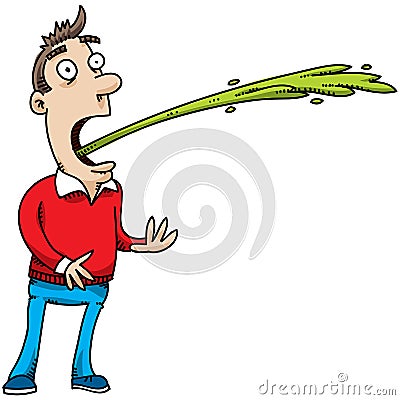

Cartoon Vomit


And Ernie Mears has given what I regard as the best definition:

vomit draft: (n)  1. writing draft in which the author spews words on the page in a chaotic outpouring of ideas, characters, plot, passion, and quite possibly last week’s dinner; 2. the art form of funneling the maelstrom of inspiration in one’s brain into a porcelain throne of paper; 3. in which a writer commits a story to paper for the first time, therein relating it to herself.  synonyms:  first draft, rough draft.  antonyms:  polished piece, final draft, completed manuscript.

That said, at the very least, we've got ourselves a book--right?  Wrong. Whether you see it as vomit or as very raw material, you have something that may become very important...with work. But what you don't have is a book.

Well, okay, okay, okay. But, hey, at least the hard part's done--right? Wrong. The second draft, for me, has always been the hardest. Daily, I have to face the reeking stylistic mess. Daily, I see again that almost every page contains twice the needed word count. The pacing is off. I'm telling and not showing. Characters still aren't developed enough. The fact is, almost everything that could go wrong with a good novel lies before the writer in a reeking puddle of vomit. And this is an excellent time to reflect: with every pass through a novel it grows harder to spot what is wrong--try to spot the Biggies now.

Still, something cool happened in the second draft of Caesar's Ghost, my WIP. I abandoned all thoughts of perfection in this pass. I squeezed every drop of defeatism and shame from my soul. If the second draft still sucked, so what? So what if took me three more drafts...or five? No one would see the book until I ready to show it. So why not enjoy this pass, working with humbler goals:
--Work calmly, daily, without stress--from a hard copy of the text.
--Cut only verbiage that is obviously excessive.
--Focus on pacing, logistics and clarity.
--Don't think about stylistic razzmatazz. But do accomplish in this pass a professional level of prose.
--Make notes for any challenge that can't be resolved at this time.


Well, okay, okay. But then the second draft's done. And, relatively speaking, the third draft should be a cake walk--right? Maybe right...but maybe wrong. Depends on what your values are and how good a writer you hope to become.

Three drafts will be enough for some and one too many for others. Still others may need four or five. But if you do decide on a third, let the third be extra-special. With all that has been cleared away, you may spy new opportunities--for a plot twist or a character or a turn of phrase. Nothing is final until you sign off. So allow yourself at least one more pass...with a world of potential before you.


Sunday, September 21, 2014

It's the Tiniest Thing(s) That Can Get You

By the 49th draft of a novel, you'd think that you've got it down pretty well pat. A bit more pruning and prettification, then you'll be set to go. Right? Well...

The enemy at this point is a simple fact of life: with every pass through a novel, our blinders grow more tightened to anything we've missed. We're quite right to search with new fury for typos, spellos and grammos that have slipped past our eagle eyes. At the same time, though, we need to renew our hunt for wrongos that can undo us: inconsistencies, lapses in logic, glitches in the timeline, etc. 

I'd also add to this list small wait-a-second spots. These are especially deadly for writers of suspense, for they break the charmed narrative spell and cause readers to scratch their heads in wonder: Wait a second, haven't we established that the character's wearing brown socks and not green?...Wait a second, now the author's saying that his character was warned by X about Y two or three chapters ago? Where's the warning hidden?...Wait a second, the hero was listed as fourth on a list of seven victims--and now he'll be the third to go?

Wrongos occur for good reasons sometimes, A character was dropped, for example, resulting in the changing of a list. Or the timeline was condensed to add some more oomph to the story or simplify things for the reader. And, not to be too unkind to ourselves, wrongos are inevitable when we're spending months, even years, on our books. Even with the best of charts, our characters' eye colors may change on us...or, God save us, we may forget the color of their socks.

I'm happily hunting for wrongos these days as I work on RC, my new winter release. And each day's work starts with this mindset: small slips are waiting to get me and I need to take them down. I owe that to my readers.

Charge!

Thursday, May 29, 2014

What If Every Book Has Its Own Mojo?

Here are only a few of the tools that great writers swear by:
--Pencils
--Pens
--Legal pads
--Stenographer's notebooks
--Moleskine notebooks
      Reporter-style
      Standard
--Spiral schoolboy notebooks
--Index cards

Now let's proceed to the writing itself:
--Long hand
--Laptop
--Tablet
--Dictation software

And let's consider the eternal questions:
--Outline
--Spontaneous creative combustion
--Number of drafts

As writers we may spend years fine-tuning the method that we say as ours--without meeting anyone who works in the same way. Though I put a lot of mileage on my laptop in the long course of writing a novel, I can't imagine not drafting it out first by hand. With what? Why, a mechanical pencil filled with thick number 7 lead.

I used legal pads for many years, gravitating to index cards because I frequently wrote on the run and liked the notion of having much of my book in my pocket. I also liked the ease of shifting pages or chapters around. Still, Moleskine notebooks came to exert a potent appeal: pocket-sized but with a solidness that strengthens my sense of a real book in the works.

So, I'm a Moleskine man for now. But I find myself starting to wonder if certain new books may call for new methods, new tools. One day I may hear the call to draft a new book on a tablet...or even use dictation software. And I've committed to heeding the call if and when I hear it.

Oh, I'll still love my pencils and Moleskines. And there'll always be a soft spot in my heart for index cards. But new footwork may lead to new journeys. And isn't that, after all, what art is all about?